The Ad That Became the Order.
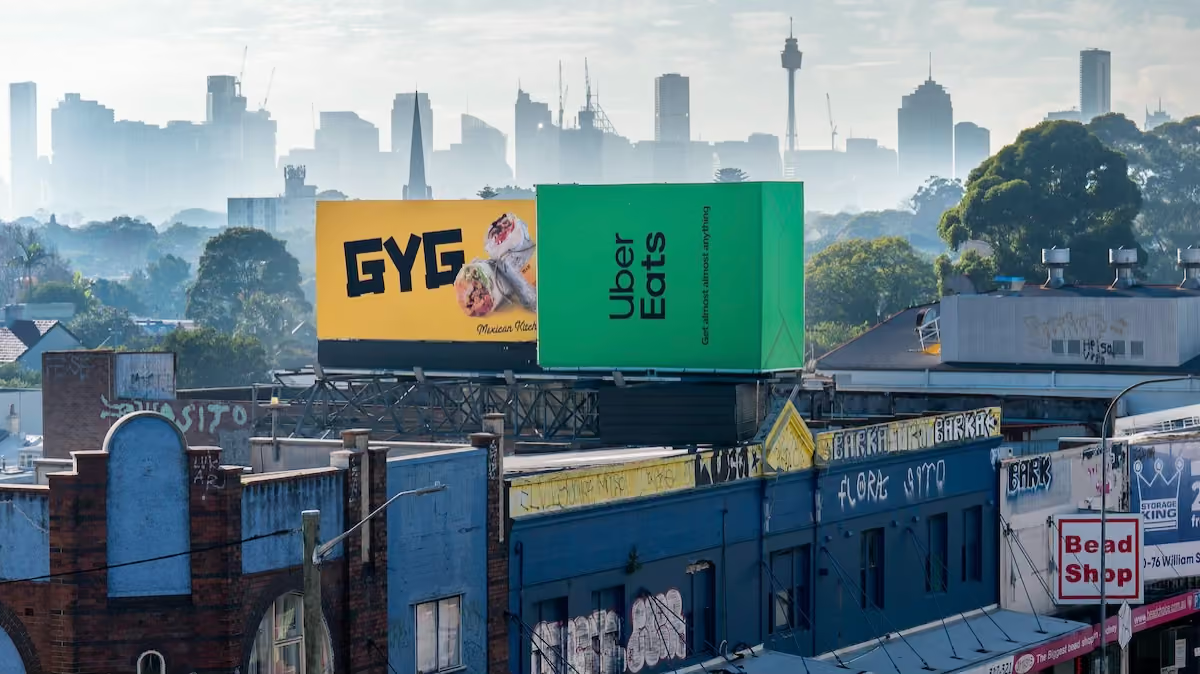
The Mechanic Is the Message.
There's a kind of OOH advertising that exists to remind you a brand is alive. Then there's the kind that makes you feel something before you've consciously registered what you're looking at. Uber Eats' "Bagged Up" campaign sits firmly in the second category, and it earns that position through one deceptively plain decision: taking the most recognisable object in delivery culture, the paper bag, and making it absurdly, physically real.
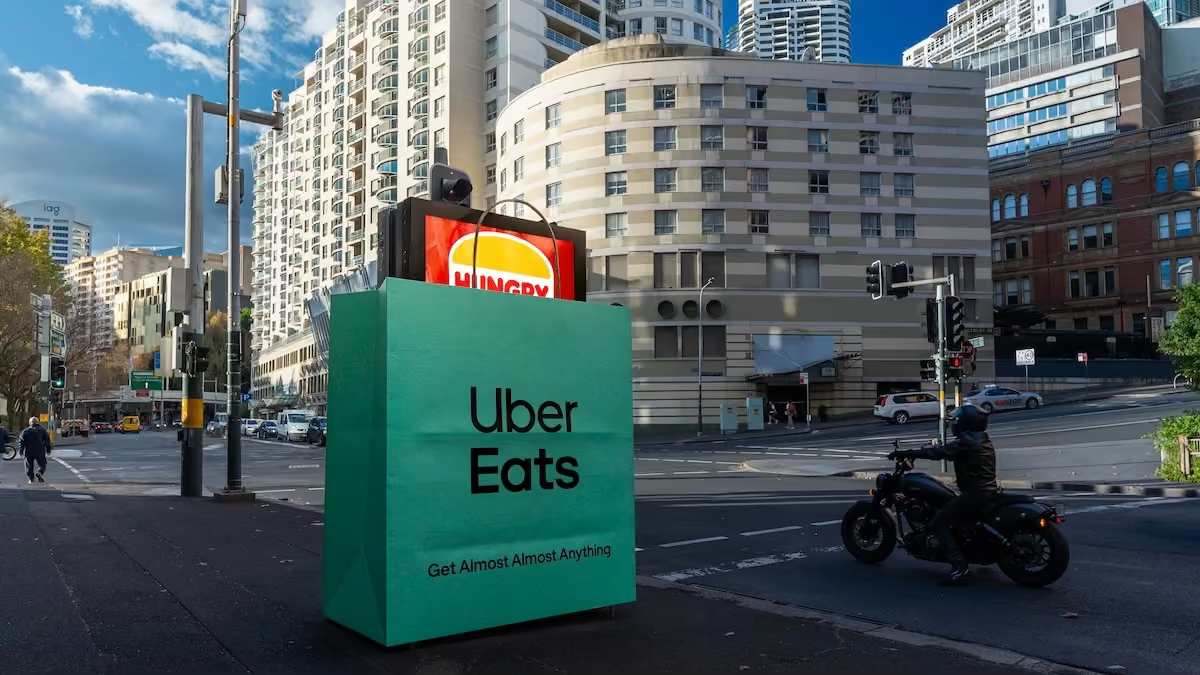
The creative thinking here is not just "let's go big." It's subtler than that. The oversized bag isn't just big. It's accurate. The crinkle, the fold, the handle, the slight bulge of something inside. These are the exact sensory cues that trigger a specific kind of anticipation in anyone who has ever heard a knock at the door and known what was on the other side. Uber Eats has essentially reverse-engineered the dopamine hit of delivery and planted it at a street corner in broad daylight.
What makes it structurally sharp is the partner brand peeking out from the top. McDonald's golden arches glowing from inside a green bag at dusk. A 7-Eleven stripe visible above the handles in a CBD street. These aren't just logos dropped in for reach. They're the proof of concept. The bag tells you what Uber Eats does. The brand inside the bag tells you it actually works.
“The bag is not an ad for Uber Eats. It is an Uber Eats bag.”
What Happens When You Walk Past It.
The honest truth about most OOH is that it asks nothing of you. You see it, you register it, you move on. It's ambient. That's its job. "Bagged Up" does something different. It triggers a specific behavioural impulse that most advertising can only gesture toward.
Someone walks past the bag on a Sydney street. They're not hungry yet. They might not even be thinking about food. But there's something almost Pavlovian in how the object operates. The bag is not an ad for Uber Eats. It is an Uber Eats bag. The category association is so direct, so deeply embedded in the modern consumer's ritual, that the gap between seeing and wanting collapses faster than usual.
The campaign works hardest on commuters. The person sitting on a bus, staring out at a green box towering over a rooftop, or the driver idling at a light who clocks a giant takeaway bag looming between two trees. These are not people actively shopping. But they're people who will be home in twenty minutes. The bag has already done its work. By the time they get through the door, they've practically already ordered.
That quiet conversion mechanic, turning passive exposure into a near-subconscious CTA, is genuinely rare in outdoor. Uber Eats didn't shout. They just put the bag there.
Our Take.
The campaign is confident and it deserves to be. But there's one layer of possibility that feels like it was left in the brief.
The bag changes. Different brands inside it on different days, different locations: McDonald's here, 7-Eleven there. That's smart localisation and a good media strategy. What it doesn't do is let the city in on it. We'd have pushed Uber Eats to run a live "what's in the bag today" social feed, updated daily to match whichever partner was featured at each outdoor site. Geo-tagged, time-stamped, genuinely functional. A passer-by in Brisbane scans the bag, sees 7-Eleven is today's feature, gets a discount code for a 7-Eleven delivery. The IRL bag becomes a live ad. The outdoor becomes shoppable without a single QR code in sight.
It would also extend the earned media life of the campaign considerably. Right now it's been covered as a curiosity. With a live mechanic attached, it becomes a scavenger hunt. People would seek out the bags to find out who's inside.
The work is already doing what great outdoor should do.
...It just stopped short of making you reach for your phone.